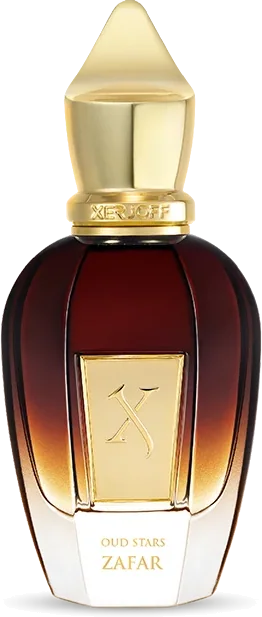
What Does Xerjoff Zafar Smell Like?
Zafar, released in 2012 as part of Xerjoff’s Oud Stars collection, is one of the more polarizing entries in the line because it leans genuinely animalic rather than polished and sweet. The opening hits with black pepper right away, joined by a rose that stays dry and spicy instead of jammy. Incense smoke weaves through this early phase almost immediately, so within the first ten minutes you already get the core identity: pepper, rose, and smoke over real-tasting oud.
The heart brings Moroccan neroli and white flowers, which sounds like it would lighten things up. In practice the florals sit on top of the oud rather than replacing it, adding a slightly soapy, honeyed lift that keeps the composition from turning fully fecal or barnyard. Community reviewers consistently describe Zafar as woody-animalic, and that floral layer is what separates it from darker oud releases in the same collection.
In the drydown the two ouds, Laotian and Burmese, take command alongside cedarwood, Haitian vetiver, incense, and musk. The final hours are dry, smoky, faintly sweet wood with a soft musky glow on skin. If you expect the sugary Xerjoff style of Naxos or Erba Pura, this is not that fragrance.
Performance
Longevity is the strong suit here. User reports across Fragrantica and Parfumo regularly describe a full workday of wear, with 8 to 12 hours being the realistic range and skin scent traces lasting longer still. Parfumo’s aggregated scores put longevity around 8.1 out of 10.
Projection is more modest. Zafar sits at moderate sillage, rated around 7.6 out of 10 by Parfumo users, and several reviewers note it projects less aggressively than other Oud Stars releases. The first hour carries a noticeable radius of pepper and smoke, then it pulls closer for the rest of the wear. For buyers who find modern oud perfumes suffocating in close quarters, that restraint is arguably a feature.
Value is where the numbers turn harsh. At $332 for 50 ml direct from Xerjoff, and with community value ratings hovering under 6, you are paying a serious premium for the raw materials and blending quality.
Best Clone Or Alternative
The Dua Brand sells Dhafar as an explicit inspiration of Zafar at $36 for 34 ml of extrait de parfum, roughly nine times cheaper per bottle. Dua lists essentially the same notes: agarwood, incense, pepper, musk, cedarwood, vetiver, white flowers, rose, and neroli, plus a green apple accent in the opening that reads slightly fruitier than the original.
A similarity around 85 percent feels fair. Dhafar captures the smoky oud and incense structure at strong concentration, but the blend is simpler and the transitions between phases are less seamless. One practical caveat: the Dhafar listing has been showing sold out at times, so availability fluctuates. If it is in stock and you mainly want the Zafar vibe on a budget, it is an easy recommendation. The original still wins on refinement, naturalistic oud, and the way the florals melt into the base.
When To Wear It
Zafar is built for cool weather and evenings. Fall and winter are the obvious fits, and spring nights work too, while summer heat amplifies the animalic side in ways most wearers will not enjoy. It suits special occasions, dinners, and quiet settings where a smoky signature reads intentional rather than loud. Office use is possible thanks to its moderate projection, but only in small doses.
Who Should Buy It
Oud enthusiasts who want a Western-rendered but honest animalic oud will get the most from Zafar. It also fits collectors who already love the Oud Stars line and want the darker, less sweet corner of it, and anyone who values longevity over projection.
Who Should Skip It
If your taste runs to sweet gourmand ouds, fresh designer scents, or crowd-pleasing office fragrances, skip it. The animalic facet and $332 price tag make it a hard sell for cautious buyers, and first-time niche shoppers should sample before committing.
Final Verdict
Zafar is a well-made, long-lasting smoky oud with a distinctive peppery rose opening and a restrained sillage that flatters it. Its weaknesses are versatility and price. Try Dhafar first if budget matters; buy the original if the blending quality justifies the cost for you.