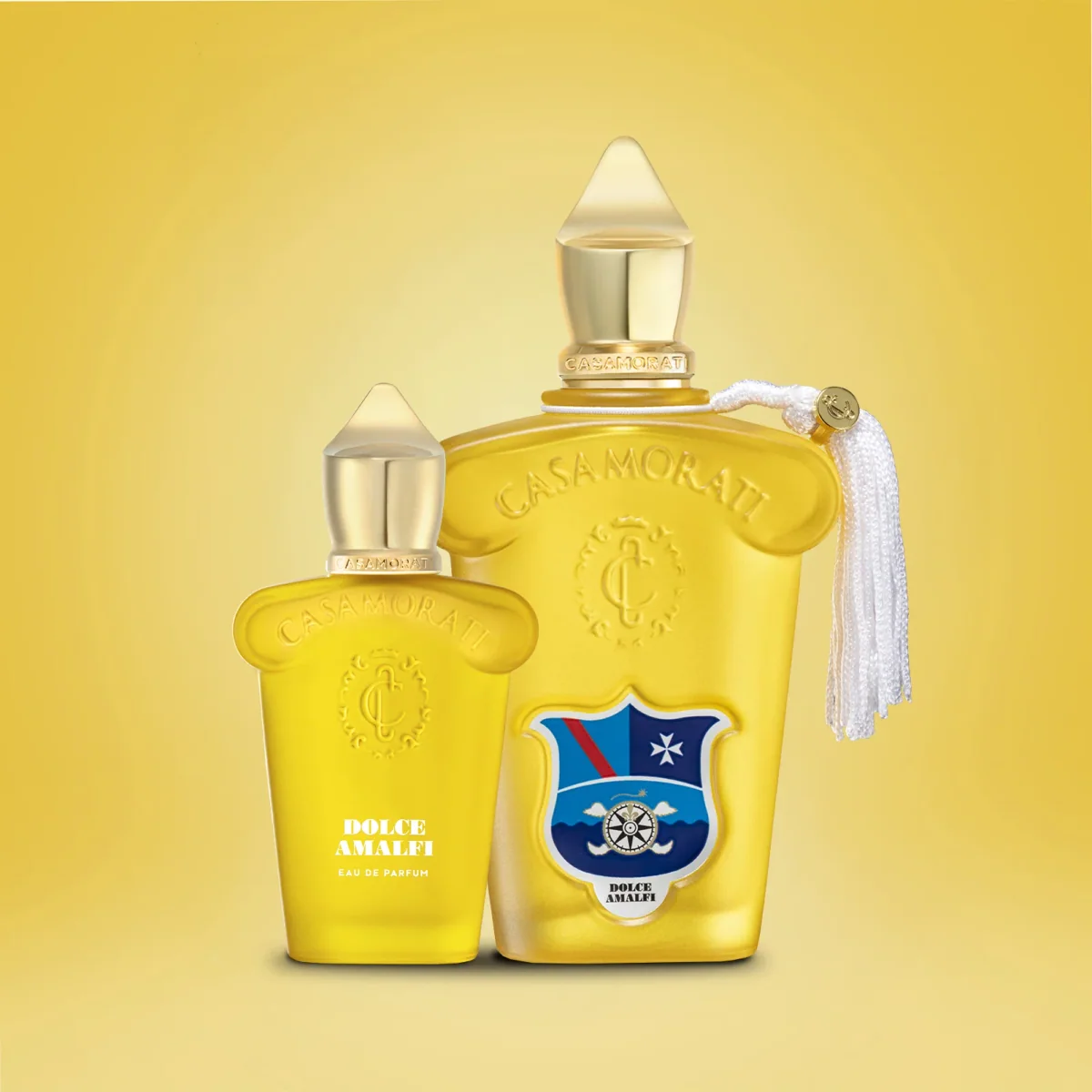
What Does Xerjoff Dolce Amalfi Smell Like?
Dolce Amalfi, part of Xerjoff’s heritage-styled Casamorati 1888 line, is built on an unusual pairing of juicy fruit and heavy spice. The first minutes are dominated by quince and apple, two fruits most perfumes never use, brightened by cardamom and given a leathery edge by saffron. This opening reads sweeter and rounder than a typical fruit top note, closer to baked orchard fruit than fresh juice.
Within half an hour the heart takes over. Clove bud brings real warmth without tipping into dental territory, incense adds a faint smoky thread, and tolu balsam glues everything together with a resinous, almost cola-like sweetness. Clary sage keeps the middle from collapsing into pure sugar.
The drydown is where the fragrance earns its price discussions. Vanilla, tonka bean, and amber form a plush, powdery base, supported by quiet cedar and musk. By hour three it smells like spiced pastry dusted with vanilla sugar, and that powdery amber phase lasts longest on skin. If you know Lira or Naxos from the same house, Dolce Amalfi sits in the same family of gourmand-leaning Italian orientals, just fruitier and less tobacco-driven.
Performance
Community reports cluster around 5 to 8 hours of longevity, which is solid for an eau de parfum but not the monster performance some expect at this tier. Projection is moderate: strong enough to be noticed in the first two hours, then settling into a close-wearing scent that lingers on scarves and coats. Cold air flatters it considerably, stretching the amber base well into an evening, while summer heat makes the sweetness push harder and can turn cloying. Application on fabric rather than skin reliably buys extra hours. For a $264 bottle this is respectable rather than exceptional, and anyone expecting all-day sillage should calibrate expectations accordingly.
Best Clone Or Alternative
Perfume Parlour’s Andrea - 1720 is the most direct budget route to this scent. It reproduces the entire pyramid, including the quince and saffron opening and the tonka-vanilla finish, at £22 for 50ml against the original’s $264 for 100ml. It lands around 85 percent similar in blind comparisons: the framework matches closely, but the original has better blending, a deeper resinous heart, and noticeably stronger projection. The impression also fades faster, so midday reapplication is common. As a way to test whether the style suits you before committing to a full bottle, it does exactly what an impression should do. Anyone satisfied with the general profile may find the impression sufficient for regular wear.
When To Wear It
This is firmly a fall and winter fragrance. It performs best on cool evenings, date nights, dinners, and special occasions where its cozy sweetness registers as intentional rather than loud. In an office it works during colder months if applied lightly, since the clove and incense keep it from reading like dessert. Spring evenings are workable, but hot weather distorts the balance and wastes what makes it interesting. Evening wear suits it far more than daytime errands.
Who Should Buy It
Dolce Amalfi fits collectors who want a distinctive cold-weather gourmand that avoids the tobacco-vanille template, fans of Lira or Angels’ Share looking for something fruitier, and anyone drawn to powdery, resinous ambers with a feminine-leaning sweetness. It rewards people who sample first and appreciate niche-level blending as part of what they pay for.
Who Should Skip It
Anyone seeking a versatile daily signature will find its seasonal range too narrow. Those who dislike powdery sweetness should test before buying, since the vanilla-tonka drydown dominates the second half of the wear. Buyers who judge purely by cost per hour can get most of the experience from the Perfume Parlour impression, and anyone expecting room-filling projection at this price will be disappointed.
Final Verdict
Dolce Amalfi is one of the more distinctive compositions in the Casamorati line, pairing quince, apple, and saffron with a genuinely well-built spiced amber base. Its weaknesses are honest ones: moderate longevity, a narrow seasonal window, and a price that assumes you value the original composition. If the profile speaks to you after a sample, the full bottle justifies itself through quality and character. If not, Andrea - 1720 delivers a convincing version of the idea for a fraction of the cost.