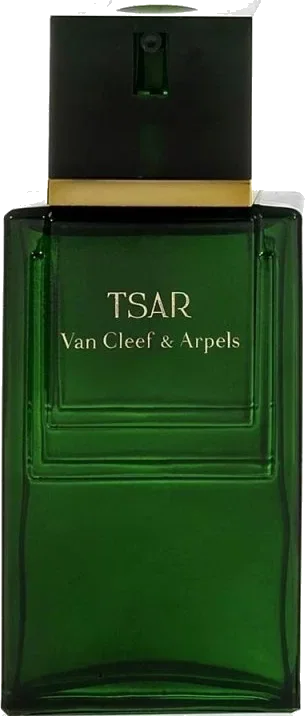
Van Cleef & Arpels released Tsar in 1989, near the end of the era when designer houses regularly shipped dense, green, moss-heavy masculines. It never became a mainstream blockbuster, which is exactly why it still interests fragrance buyers today: it smells like nothing currently on department store shelves.
What Does Van Cleef & Arpels Tsar Smell Like?
The opening is unapologetically green and bitter. Artemisia leads, backed by bergamot, rosemary and a lavender-coriander pairing that gives it a clean barbershop frame. Juniper berry adds a dry, gin-like edge, while cinnamon and neroli keep the bitterness from turning austere. The first ten minutes can read sharp, almost medicinal, if you spray close to the nose.
The heart softens into spiced florals. Carnation and geranium dominate, with tarragon and caraway adding an anise-adjacent twist. Pine tree threads through the middle and carries straight into the base, which is where Tsar earns its reputation. Oakmoss, leather, cedar and vetiver form a proper chypre foundation, warmed by amber, tonka bean and a faint coconut sweetness. The drydown is mossy, woody and quietly leathery rather than loud.
In short: imagine a classic green fougere crossed with a chypre, more refined than Quorum but far moodier than anything marketed today.
Performance
Tsar is an eau de toilette and behaves like one. Expect six to eight hours on skin, with the moss-and-leather base lasting longest on fabric. Projection is moderate: it creates a respectful arm’s-length bubble for the first hour or two, then pulls in close around the third hour. That restrained sillage is arguably a feature now, since most modern workplaces tolerate quiet scents better than loud ones. Longevity complaints usually come from people comparing it to modern extraits, which is an unfair benchmark for a formulation style from 1989.
Best Clone Or Alternative
Dua Fragrances Emperor’s Elixir is the closest alternative we have found. It lists the same note structure Tsar uses, from the lavender, artemisia and bergamot opening through the oakmoss, leather, vetiver and tonka base, and Dua positions it explicitly as a recreation of the original. At about $50 it costs more than a discounter bottle of Tsar, so the value case depends on availability: Tsar’s distribution is patchy, and stock often comes from older batches. The tradeoff is concentration. Emperor’s Elixir is built at extrait strength, so it wears slightly denser and rounder than the crisp EDT, and some of the original’s bright green snap gets smoothed out in translation. If you want the exact 1989 character, hunt down the original. If you mainly want the vibe and guaranteed supply, the Dua works.
When To Wear It
Tsar suits fall and winter best, when its moss and leather base has cool air to move through. Spring daytime works too, especially overcast days where green fragrances shine. It handles office wear well because projection is controlled, and it transitions naturally into evening. Summer heat pushes the artemisia bitterness forward and flattens the base, so it is not the warm-weather pick.
Who Should Buy It
Buy Tsar if you already know you like classic masculines: Quorum, vintage Paco Rabanne pour Homme, Drakkar Noir-era compositions. It is also a smart pickup for anyone who wants a mature, office-safe green scent at a low price, since discounters routinely sell the 100 ml bottle in the $30 range.
Who Should Skip It
Skip it if your collection leans sweet, gourmand or aquatic. The bitter-green opening polarizes, and wearers used to modern blue fragrances often read it as dated or soapy. Anyone sensitive to oakmoss-heavy chypres should sample first.
Final Verdict
Tsar is a competent, distinctive green chypre that survived on merit rather than marketing. Ratings of six for longevity and five for projection reflect honest EDT performance, while versatility and value land at seven because it covers office, evening and cooler months at a modest cost. The original remains the better buy when you can find it; Emperor’s Elixir is a solid backup plan when you cannot.