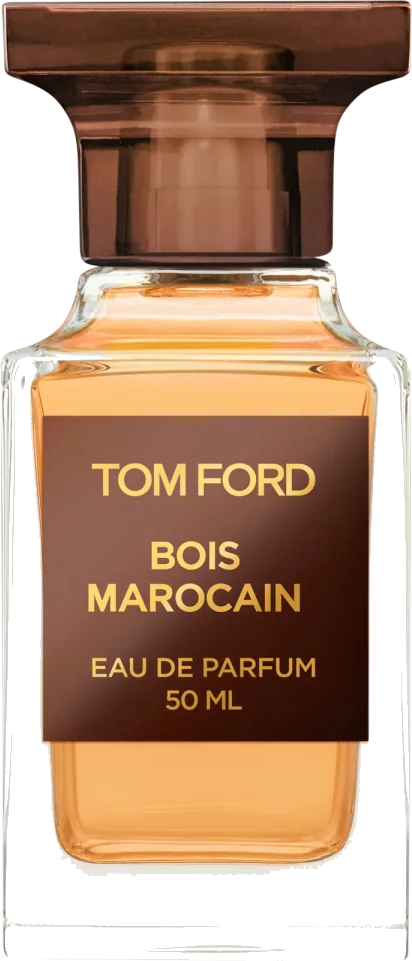
What Does Tom Ford Bois Marocain Smell Like?
Bois Marocain, released in 2009 under the Private Blend line, is one of the driest fragrances Tom Ford ever put his name on. The opening is bright but sharp: bergamot and juniper over both black pepper and pink pepper, so it starts fresh and spicy before the wood arrives. Within fifteen minutes the heart takes over, and this is where the fragrance earns its reputation. Thuja, the cedar species sometimes called arborvitae, brings a slightly camphorous, pencil-shaving quality that sits alongside Virginia cedar and Atlas cedarwood. Cypress adds a green, dry timber feel, and incense threads a smoky, faintly charred edge through all of it.
The drydown keeps that dry wood structure and softens it with vetiver, patchouli, and sandalwood. There is a low amber warmth underneath, but nothing here turns sweet or creamy. If you expect the plush, dessert-leaning side of Tom Ford, this is the opposite camp. The vintage formulation is remembered by enthusiasts for being bolder and more resinous than the later re-release, which many reviewers describe as noticeably weaker.
Performance
Temper expectations. Community consensus places the vintage eau de parfum at around 4 to 8 hours of wear, with moderate projection. The first hour or two carry real sillage, especially in cool air, but it settles close to the skin well before midpoint. On fabric it lasts longer than on skin. That restraint is part of why it works in an office, though buyers paying collector prices for a discontinued bottle are often surprised at how polite it wears. Applying six to eight sprays is a common workaround, and the extrait-strength clone below sidesteps the problem entirely.
Best Clone Or Alternative
Dua’s Wood of Morocco is the practical answer. Dua states directly that it recreated the 2009 vintage formula rather than the diluted re-release, and the note list matches almost one to one: Virginian cedar, cypress, thuja, incense, vetiver, pepper, pink pepper, patchouli, and bergamot. It comes as a 33 percent concentration extrait de parfum in a 34ml bottle for $36.
Similarity sits around 80 percent. The core accord of dry cedar, green cypress, and swirling incense reads the same, and the higher concentration means the woods project more confidently than the vintage EDP. What the original does better is polish. Tom Ford’s blend is smoother, the transitions between opening, heart, and base are more seamless, and the bottle has collector value the clone cannot match. If you only want the smell, Wood of Morocco gets you most of the way for a fraction of what a genuine 2009 bottle costs on the secondary market. If you want to try the original without committing, Scent Split carries vintage decants from $16.99.
When To Wear It
This is a fall and winter fragrance first, and it holds up well in spring thanks to the peppery, green opening. Heat flattens the incense and pushes the thuja into harsh territory, so skip it in summer. It suits offices, formal events, and daily wear equally because projection stays controlled, and the dry, elegant character reads dressed-up without being loud. Daytime or evening both work.
Who Should Buy It
Buy it if dry woods are your lane: people who love cedar, cypress, frankincense, and vetiver will find a compact, well-built example here. It also fits anyone who missed the discontinuation and wants the vintage-era character without gambling on gray-market bottles. Fans of classic masculine woody perfumery from the late 2000s will recognize the style immediately.
Who Should Skip It
Skip it if you want sweetness, warmth, or heavy spice, because there is none of that. Skip it if longevity is your priority, since 4 to 8 hours is average at best. Anyone sensitive to camphorous, pencil-cedar notes may find thuja abrasive. And if you refuse to hunt decants or pay secondary-market pricing, the clone serves you better anyway.
Final Verdict
Vintage Bois Marocain is a genuinely distinctive dry woody incense fragrance let down by modest performance and difficult availability. At current collector prices it is hard to call good value, which is why Dua’s Wood of Morocco makes sense for most buyers: same idea, stronger concentration, honest price. Sample the original in a decant first, and buy a full vintage bottle only if its smoothness matters enough to justify the premium.