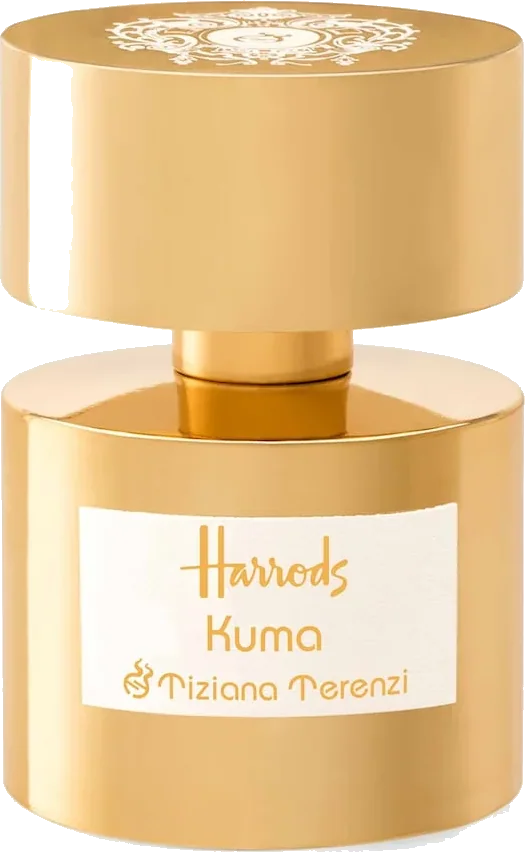
What Does Tiziana Terenzi Kuma Smell Like?
Kuma is Tiziana Terenzi’s tribute to childhood walks through the lemon scented Tuscan-Emilian Apennines, and the composition does feel like a landscape rather than an abstract concept. The opening is immediately juicy. Passion fruit leads, flanked by blackcurrant, lemon, and bergamot, so the first ten minutes read as a bright tropical fruit salad with real acidity rather than candy sweetness.
As the top notes burn off, the heart turns floral and green. Magnolia and lily of the valley bring clean white petals, fig leaf adds a milky bitterness that keeps the fruit from tipping into syrup, and peach and raspberry extend the juiciness. A modest dose of cinnamon warms things up without turning Kuma into a spiced gourmand. This middle phase is the most distinctive part of the fragrance, because few perfumes combine tropical fruit with green florals this cleanly.
The drydown is where the extrait concentration shows. Vanilla bean and vanilla flower soften into musk and amber, while sandalwood, oak, and birch give the base a dry, slightly smoky wood structure. On skin this final stage feels like sweet fruit resting on pale woods, comfortable and easy to wear. If you dislike fruity florals that stay loud for hours, note that Kuma keeps its fruit character until the end; only the supporting frame changes.
Performance
Kuma is an extrait de parfum, but it behaves more like a well mannered one than a monster. Community consensus and retailer descriptions point to moderate longevity of roughly six to nine hours on skin, with above average projection in the first two hours before it settles into a closer scent bubble. That profile suits office wear better than many extraits do, though two or three sprays are plenty. Longevity dips toward the lower end in summer heat, when the fruit notes seem to evaporate faster.
Best Clone Or Alternative
Dua Magnifico is the obvious choice. The Dua Brand sells it openly as an impression of Kuma, a Harrods exclusive, and it reproduces the same pyramid: passion fruit, bergamot, lemon, and blackcurrant up top, magnolia, cinnamon, raspberry, lily of the valley, fig leaf, and peach in the middle, then vanilla, oak, musk, amber, birch, and sandalwood in the base. It ships as a 33 percent concentration extrait in a 34ml bottle for 65 dollars, roughly a tenth of what Kuma costs.
Community feedback treats Magnifico as one of the closer Dupes in Dua’s catalog, and an 88 percent similarity estimate is fair. The differences show up in texture. The original has smoother transitions between phases and a more natural fig leaf note, while Magnifico can feel slightly more synthetic in the first hour. Given the price gap, most buyers lose very little by starting with the clone.
When To Wear It
Spring through fall is the sweet season range. The fruit and florals shine in mild weather, and the woody base gives it enough weight for cool evenings and date nights. It also works as an everyday signature during warmer months because projection stays controlled. Vacation and leisure settings fit its sunny personality best; formal boardrooms are fine but underuse it.
Who Should Buy It
Kuma suits anyone who wants a fruity floral with actual structure beneath it: fans of Kirke or Cassiopea who want something less ubiquitous, collectors chasing Harrods exclusives, and wearers who like tropical scents that avoid pure coconut cliches. It is genuinely unisex, with the birch and oak keeping it from leaning feminine.
Who Should Skip It
Skip it if sweet tropical fruit gives you a headache, if you want a challenging niche statement, or if paying around 600 dollars for 100ml of a fruity floral feels unjustifiable. Anyone primarily interested in the scent should try Dua Magnifico first.
Final Verdict
Kuma is a well built fruity floral woody extrait whose main obstacle is access and price, not quality. The composition moves convincingly from tropical juice to green florals to warm woods, lasts a solid workday, and stays versatile across three seasons. For most people, Dua Magnifico delivers about 88 percent of the experience for a tenth of the cost. Buy the original if you value the refinement and the exclusivity; otherwise the clone is the smarter purchase.