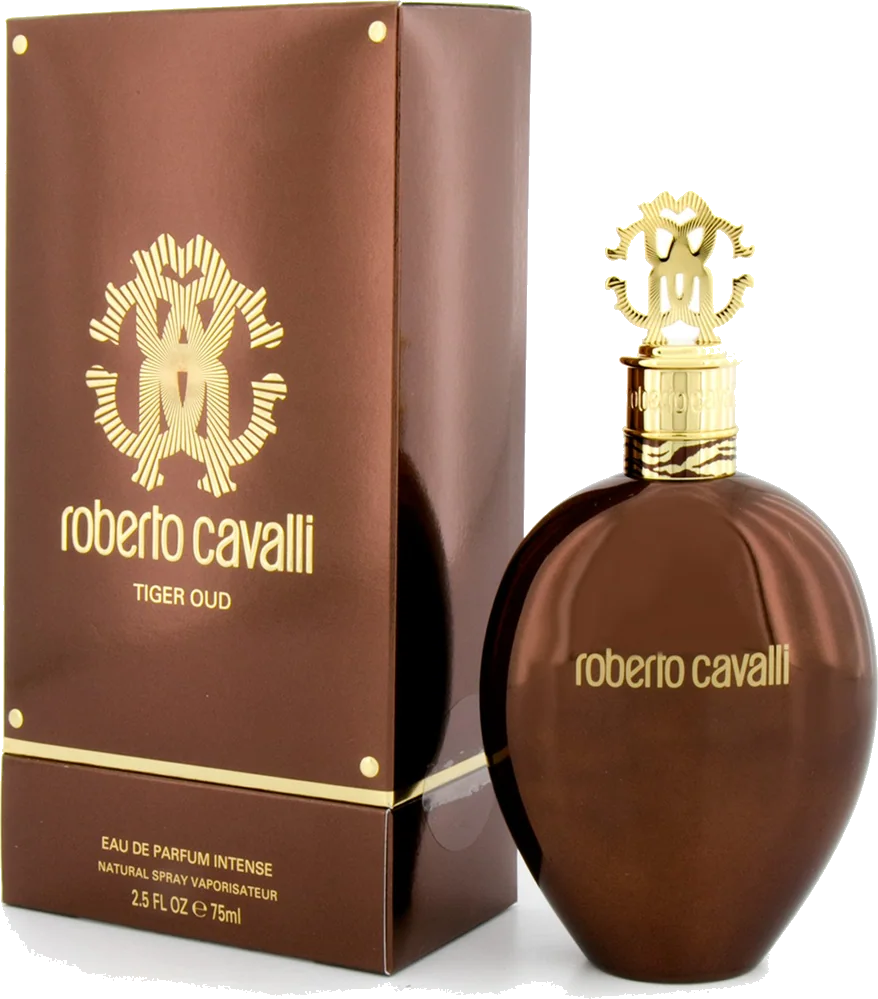
Roberto Cavalli released Tiger Oud in 2013, during the wave of Middle Eastern inspired oud launches that swept through designer fragrance lines early that decade. It never became a mainstream bestseller, and today it survives mostly on resale sites, which makes it one of the more interesting rediscoveries in the Cavalli catalog.
What Does Roberto Cavalli Tiger Oud Smell Like?
The note pyramid is unusually spare: agarwood listed on top, rose in the heart, and both again in the base. That simplicity is the whole idea. The opening is oud, full stop, dense and resinous with a slightly medicinal, animalic edge and a brief fresh spicy and citrus flicker that keeps it from feeling flat in the first minutes. Community descriptions consistently call this phase loud and unapologetic, and they are right.
After roughly an hour the rose emerges. It does not soften the composition so much as illuminate it, reading like dried petals rather than a fresh garden rose. By hours four and five the drydown arrives: the oud settles into something warmer and quieter, the rose lingers as an echo, and a light powdery warmth closes things out. Unlike most designer ouds, Tiger Oud avoids the sweet saffron and amber scaffolding you find in comparable releases. It sits oriental without being sugary and floral without being delicate, which is exactly why it divides opinion.
Performance
Longevity is the strong suit. Wearers consistently report 6 to 10 hours on skin, with residual scent on the wrist the next morning in cooler weather. Projection is strong for the first two to three hours, enough that people nearby will notice without you overspraying, then it pulls back to a moderate radius for the rest of the wear. Two caveats come up repeatedly: it is too much in heat and humidity, where the animalic side turns harsh, and the close-range blast in the opening bothers some noses. Two sprays handle most situations.
Best Clone Or Alternative
Perfume Parlour sells Amur Wood 1185 as its own inspired-by take on Tiger Oud, and it reproduces the same minimalist oud and rose skeleton faithfully. Expect to pay around 18 pounds for 50ml of the oil version against resale prices that often run past 200 dollars for 75ml of the original, so the value gap is enormous.
The tradeoffs are real, though. As a fragrance oil it sits closer to the skin and lacks the alcoholic bloom that makes the Cavalli’s opening hit so hard. The original also wears longer per application and carries the proper EDP sillage. If you want the full Tiger Oud experience for special occasions, hunting a decant or a resale bottle makes sense. If you just want the scent on a daily basis, Amur Wood gets you most of the way for a tenth of the cost.
When To Wear It
Fall and winter are its natural habitat. Evening wear, date night, and special occasions are where the boldness pays off, and community voting backs up night over day fairly clearly. Keep it away from the office and hot summer afternoons.
Who Should Buy It
Anyone who likes straightforward, unsweetened rose and oud compositions will enjoy this. It suits wearers who want presence without sugar, collectors filling out the early 2010s designer oud era, and anyone curious about the style who finds niche pricing intimidating. It reads genuinely unisex.
Who Should Skip It
If animalic oud smells medicinal or barnyard to you, this will be unpleasant rather than intriguing. Skip it if you need a versatile office-safe signature, live in a warm climate year round, or dislike powdery drydowns. And if you balk at paying resale markup for a decade old designer release, the clone covers the basics.
Final Verdict
Tiger Oud is a focused, well built rose oud that trades versatility for character. Its performance easily beats most designer competitors and its refusal to add sweetness keeps it distinctive even now. Scarcity and price hold it back, which is why Perfume Parlour’s Amur Wood earns a spot alongside it. Try the oil first, then decide whether the original deserves a place on your shelf.