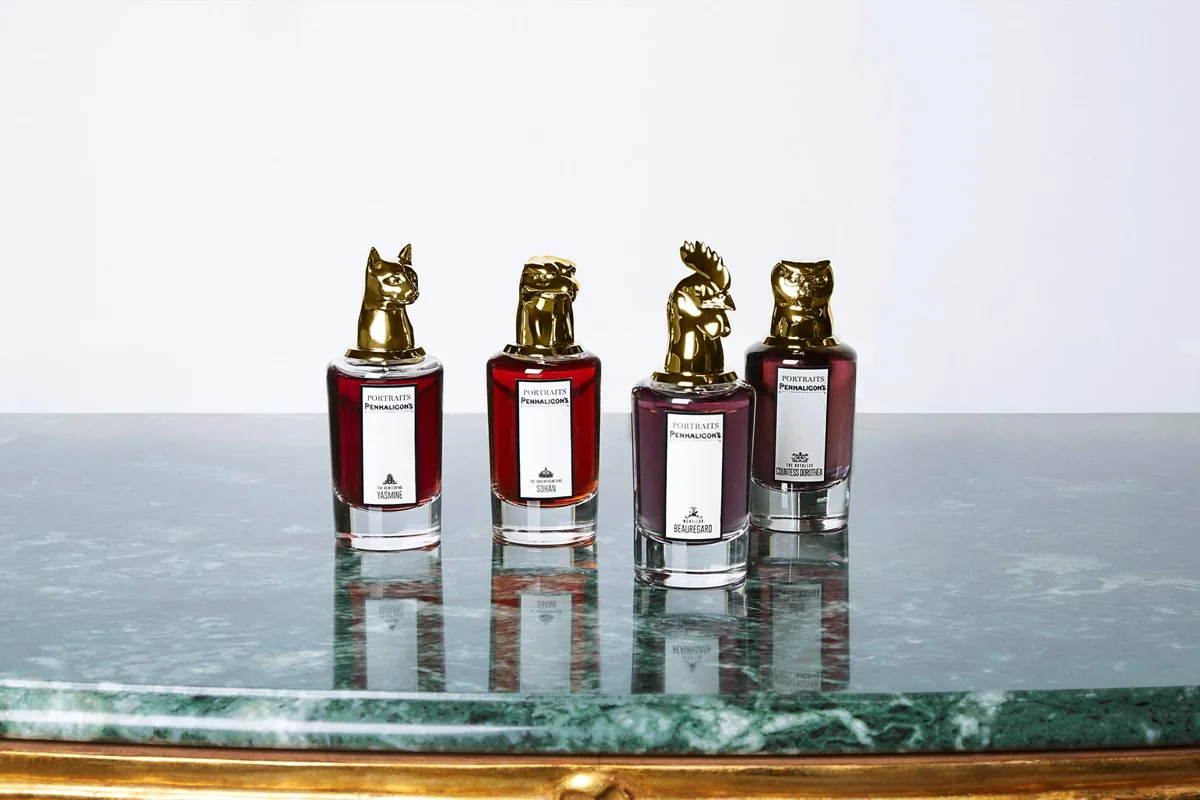
What Does Penhaligon’s The Uncompromising Sohan Smell Like?
Sohan, fully named The Uncompromising Sohan, sits in Penhaligon’s Portraits Collection as a men’s rose-and-oud fragrance released in 2017. The opening is the liveliest part. Jammy rose arrives first, sharpened by leathery saffron and a crackle of pink pepper. This phase reads distinctly Middle Eastern in style, close to a modern Arabian rose oud, yet cleaner and more polished than most entries in that genre.
After the first half hour the heart takes over with labdanum and vetiver. Labdanum adds a warm, slightly animalic amber sweetness while vetiver keeps things dry and grounded. In the drydown, Laotian oud and sandalwood dominate. The oud here is smooth rather than fecal or medicinal, more like polished dark wood with a faint balsamic sweetness. Community data backs this read: woody and oud are the dominant accords by a wide margin, followed by rose, warm spice, and amber, and the fragrance holds a strong 4.13 out of 5 across roughly 500 community votes.
If you want a simple summary, imagine a refined rose oud built for Western tastes, with less screech than typical Middle Eastern releases and a softer landing.
Performance
Expect 6 to 9 hours on skin. Some reviewers report 8 or more hours with strong sillage, others describe a more moderate experience, so the honest range sits in the middle. Projection is strongest in the first two hours, when the rose and pepper carry an arm’s length or more, then it settles into a close skin scent supported by the woods.
As an eau de parfum at $345 for 75 ml, this level of performance is acceptable but not exceptional. Many cheaper oud fragrances match it, which is part of why the value score runs low.
Best Clone Or Alternative
Perfume Parlour’s Sohan’s Spiced Oud For Men, numbered 2054, is the direct clone. The shop states openly that it belongs to the same olfactory family as Sohan, and it reproduces the identical note pyramid: rose, saffron and pink pepper up top, labdanum and vetiver in the middle, Laotian oud and sandalwood in the base. Entry pricing starts around $15 across sizes from small testers to full bottles.
The tradeoff is depth. The Parlour version tracks the structure well but thins out in the base, where the original’s labdanum gives a rounder, costlier-smelling amber warmth. Given that Sohan now shows out of stock at Penhaligon’s US and community threads treat it as discontinued, the clone is also one of the few practical ways to experience this scent profile without paying secondary-market prices.
When To Wear It
Cool weather is its home. Fall and winter evenings suit the density of the oud and labdanum, and spring nights work too. Occasion-wise it leans formal: dinners, date nights, events, and evening occasions where you want a richer signature. It is not a gym, beach, or high-heat daytime fragrance, and the rose oud style draws attention, so skip it when you need to be invisible.
Who Should Buy It
Buyers who enjoy rose oud compositions and want a polished Western take will get the most from it. If you like Middle Eastern rose ouds but find many of them harsh or screechy, Sohan’s smoother blend is worth sampling. Collectors who hunt Portraits releases should also note that discontinuation makes remaining bottles harder to find each year.
Who Should Skip It
Skip it if you dislike rose in masculine fragrances, since the floral note stays present through the entire wear. Skip it if you want a versatile daily scent; five days a week in an office, this is too heavy and too occasion-specific. And skip it at retail price if budget matters, because the Perfume Parlour clone covers the same ground for a fraction of the cost.
Final Verdict
Sohan is a well-built rose oud with a spicy opening, an amber-warm heart, and a smooth Laotian oud drydown. Its flaws are practical ones: limited versatility, inconsistent availability, and a price that clones undercut badly. As a collector’s piece or a special-occasion signature it earns its reputation. For everyone else, sample 2054 first and decide if the original’s richer base justifies the difference.