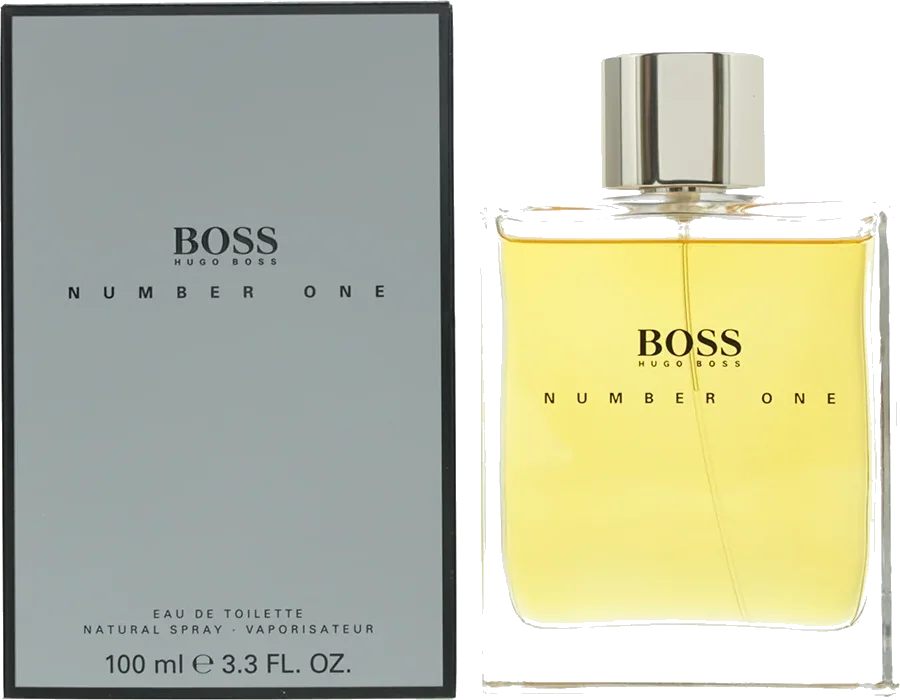
Boss No. 1 is the fragrance that started Hugo Boss’s perfume business, launched in 1985 and composed by Pierre Wargnye. It still sells today, usually discounted hard from its list price, which makes it one of the few remaining cheap ways to smell like proper eighties perfumery.
What Does Hugo Boss Boss No. 1 Smell Like?
The opening is unapologetically herbal. Artemisia, juniper berries, basil, and caraway give it a bitter, slightly medicinal green edge that most modern designer scents abandoned years ago. Bergamot and lemon brighten things up, and green apple adds a crisp fruitiness that keeps the herbs from turning austere.
After half an hour or so, honey takes over as the central theme. Lavender, sage, geranium, and a touch of rose sit around it, giving the heart a sweet but grown-up floral character. This is where the fragrance feels most distinctly of its era: honeyed florals over herbs is a signature you rarely find outside older masculines and niche chypres.
The drydown moves to tobacco leaf, oakmoss, patchouli, cedar, and sandalwood, with cinnamon and amber adding warmth. It finishes mossy, woody, and faintly sweet rather than loud. If you know Boss Bottled, think of this as its darker, more herbal grandfather.
Performance
This is where opinions split. The official concentration is eau de toilette, and community reports describe two different experiences. Owners of older bottles frequently describe a powerhouse that runs eight to twelve hours with strong projection. Wearers of recent batches more often report something gentler: two to four hours before it becomes a skin scent, with moderate projection in the first hour or two.
A fair middle ground is five to eight hours of longevity with moderate projection early on. On fabric it lasts considerably longer than on skin. In cold weather the honey and moss notes project better than they do in heat, where the whole composition flattens out. Do not buy it expecting modern Eau de Parfum strength; buy it for the scent itself.
Best Clone Or Alternative
The main dedicated alternative is Dua Hey! Bossman. Dua states outright that the recreation was built by sourcing a 1985 bottle of the original, which matters here because the vintage formulation is exactly what fans chase. It lists the same complete note pyramid, from artemisia and caraway through honey and orris root down to oakmoss and tobacco, and it ships at extrait strength, so it should outlast the modern eau de toilette on skin.
The tradeoffs are real. Hey! Bossman costs about $36 for a 34ml bottle against roughly £30 for 100ml of the original at UK discounters, so the per-milliliter math favors Hugo Boss unless you specifically want vintage-style strength. Dua also sells out regularly, and there is no published similarity score from any source, so treat closeness as likely but not guaranteed. Our rough estimate puts it around 80 percent similar, with Dua leaning richer and stronger while the original smells more balanced and natural.
If you simply want the general vibe at low cost, buying the original on discount is honestly the better move. The Dua bottle makes sense mainly for people who have smelled vintage Boss No. 1 and want that intensity back.
When To Wear It
Fall and winter are its natural habitat, and spring works on milder days. Summer heat exaggerates the honey and turns the moss sharp, so go easy then. It fits office wear, business meetings, and evening events equally well because nothing about it reads casual or trendy. Two to three sprays are plenty.
Who Should Buy It
Buy it if you enjoy classic masculine fougeres, want a cheap entry into eighties-style perfumery, or remember this scent fondly from the era. It also suits anyone tired of sweet blue fragrances who wants herbs, honey, and moss instead.
Who Should Skip It
Skip it if you only wear modern, clean, or sweet designer scents, since the bitter artemisia opening will feel dated or harsh. Skip it too if you demand all-day projection, because current batches may not deliver.
Final Verdict
Boss No. 1 earns a 6 overall: a genuinely distinctive composition dragged down by inconsistent modern performance. At discounted prices it remains one of the best-value classics still in production, and Dua Hey! Bossman covers the vintage-strength angle when it is actually in stock. Smell before you commit if possible, but at thirty pounds for 100ml, the risk is small.