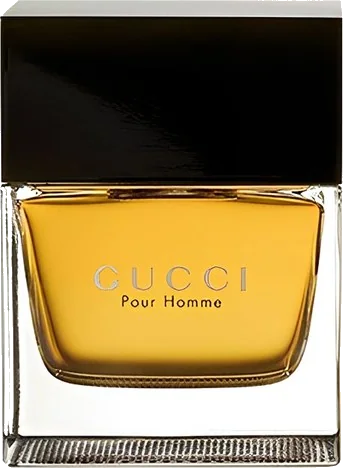
Gucci Pour Homme I is one of the most requested discontinued masculines of the 2000s, and the secondhand market reflects it. Released in 2003 during the Tom Ford era at Gucci and composed by Michel Almairac, this eau de toilette lasted only a few years on shelves before being axed, then quietly became a cult item. Today full bottles trade among collectors at volatile prices, so most people who want to smell it either buy a decant or reach for a clone.
What Does Gucci Pour Homme I Smell Like?
The most common description from owners is simple and accurate: a dry, upscale woodshop filled with expensive incense. This is not a sweet or fresh designer scent. It opens with a sharp, almost medicinal burst of ginger over papery papyrus, backed by bergamot, lavender, basil, and petitgrain that keep the first minutes aromatic rather than citrusy. Within half an hour the heart takes over: atlas cedar and sandalwood, pink pepper, patchouli, and a powdery thread of orris root with carnation and geranium adding old-school barbershop texture.
The drydown is where Pour Homme I earns its reputation. Frankincense smoke settles over amber, labdanum, vetiver, and leather, softened by restrained vanilla, tonka bean, and oakmoss. The overall effect is warm, dry, slightly powdery, and unmistakably masculine without being loud. It sits closer to a meditative temple-and-cedar composition than to anything else Gucci released in that decade, and it reads as the spiritual ancestor of later papyrus-and-incense releases like Parle Moi de Parfum’s Papyrus Oud 71.
Performance
Here is the catch that every owner mentions: the performance does not match the darkness of the scent. As an EdT, Pour Homme I typically lasts three to six hours on skin with moderate projection, fading to a skin scent well before a full workday ends. Some of that is formula, some is simply age, since surviving bottles are now well over a decade old and many circulate from batches made before discontinuation. On fabric it holds longer than on skin.
That gap between a rich, smoky character and modest longevity is the single biggest complaint in community discussions, and it directly shaped how clones position themselves against the original.
Best Clone Or Alternative
The Dua Brand’s Man Card is the practical answer. It is an explicit inspired expression of Pour Homme I, reproducing all 26 notes of the original pyramid, from papyrus and ginger through cedar, incense, and leather down to the oakmoss and tonka base. It sells for $33 in a 34 ml bottle at extrait de parfum strength, which addresses the original’s weakest point: where the EdT faded in hours, an extrait concentration should project more consistently and last longer.
Similarity is around 85 percent rather than identical. Expect Dua’s house style to render the smoke and woods slightly denser and sweeter, and expect less of the vintage character that comes from aged juice. What you lose is collector authenticity; what you gain is a wearable, buyable version of a fragrance that otherwise costs hundreds of dollars per bottle at auction. If you want to verify the comparison yourself, a $16.95 one-milliliter authentic decant from a vintage specialist is the cheapest way to smell the real thing before committing either way.
When To Wear It
This is a fall and winter fragrance first, with enough restraint to work on cool spring evenings. The incense and leather make it a natural fit for formal occasions, date nights, and evening events, and it behaves well in office settings thanks to its moderate projection. In summer heat the powdery amber side can turn heavy, so keep it out of hot weather.
Who Should Buy It
Pour Homme I suits anyone drawn to dry, woody incense fragrances who wants a mature alternative to sweet modern designers. Collectors chasing the Tom Ford era at Gucci will want a decant regardless. Practical buyers who just want the smell should start with Man Card and decide later whether the original justifies hunting down a bottle.
Who Should Skip It
Skip it if you prefer fresh, sweet, or aquatic scents, since there is nothing bright here beyond the brief ginger opening. Skip the original specifically if longevity matters more than provenance, because paying collector prices for a three-hour EdT is hard to defend when the extrait-strength clone exists.
Final Verdict
Gucci Pour Homme I deserves its cult status. The cedar, papyrus, and incense composition is genuinely distinctive, elegant, and ahead of its time. Its flaws are structural: it was discontinued quickly, surviving bottles perform modestly, and replacement cost keeps climbing. Rate the scent highly, rate the buying situation poorly. For most people, Man Card delivers the same dark woodshop signature with better staying power at a fraction of the price, making it the sensible default unless owning the authentic vintage matters to you.