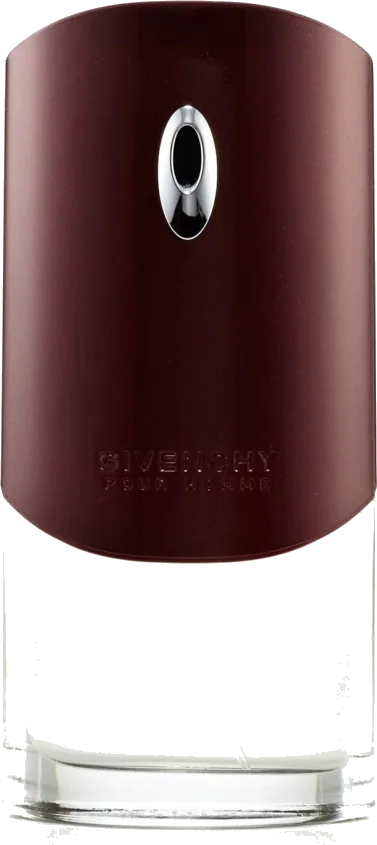
Givenchy Pour Homme arrived in 2002, composed by Alberto Morillas and Ilias Ermenidis, and it has quietly built a reputation as one of the most wearable aromatic-woody designer releases of its decade. The catch is that the version people praise, the original formulation, is no longer what you get at every counter. Bottles of the 2002 composition still circulate through online retailers, and that scarcity shapes everything about how this fragrance should be bought and worn today.
What Does Givenchy Pour Homme Smell Like?
The opening is a crisp citrus pairing of mandarin orange and grapefruit, bright but not sharp, quickly rounded out by coriander and a soft violet facet that keeps the top from smelling like a generic fresh scented splash. Within the first hour, the heart takes over with lavender and vetiver. The lavender is smooth and clean rather than medicinal, giving the middle a barbershop feel, while vetiver adds a green, earthy backbone.
The drydown is where the 2002 formulation earns its following. Cedar and labdanum settle in with a faint resinous warmth and just a hint of smokiness, resting close to the skin. The overall impression is powdery, woody, and composed. This is restraint as a design choice: no heavy sweetness, no ambroxan blast, nothing trying to compete with modern blue fragrances.
Performance
Set expectations correctly here. As an eau de toilette, the 2002 Pour Homme typically lasts 5 to 7 hours on skin, with projection that is moderate early and skin-scent territory by hour three or four. Community consensus consistently describes it as polite rather than weak, and most wearers accept the tradeoff because the scent itself is so easy to live with.
If longevity matters more to you than authenticity, moisturized skin and two extra sprays help. But nobody buys this expecting a projector. Its quietness is precisely why it works so well in offices and close-quarters settings.
Best Clone Or Alternative
Dua Fragrances’ The Ruler of His Empire is the direct answer for anyone priced out of, or unable to find, the original. Dua markets it as a one-to-one inspired expression of the 2002 Pour Homme, and the note list matches completely: mandarin orange, grapefruit, coriander, violet, vetiver, lavender, cedar wood, and labdanum. It comes at extrait strength in a 34ml bottle for $36, sold through theduabrand.com.
The practical differences matter. The Dua version should outlast the original EDT thanks to its concentration, which partially compensates for the smaller volume. What you give up is the Givenchy bottle, the brand recognition, and reliable availability; the listing has repeatedly shown sold out status between production runs. At roughly 85 percent similarity, this is one of the more defensible clone purchases for a discontinued designer scent, because finding sealed vintage stock of the original often costs more per milliliter anyway.
When To Wear It
Spring and fall are the sweet spots. The citrus opening feels right in mild weather, while the vetiver and cedar carry cool autumn days comfortably. Winter works well too since the base has genuine warmth without heaviness. In high summer heat, the powdery side can turn slightly dense, so lighter application is wise.
Occasion-wise, this is a weekday workhorse: office days, business meetings, commuting, casual outings, and low-key dinners. It will not cut through a loud club, and it is not trying to.
Who Should Buy It
Buy it if you want a mature, clean, citrus-woody signature that never offends and always smells put together. Fans of classic masculine structures, people who find modern designer releases too sweet, and anyone who appreciated Pour Homme when it was widely available will feel at home here.
Who Should Skip It
Skip it if you want strong projection, bold sweetness, or a compliment monster. Younger wearers raised on blue fragrances may find it dated and quiet. And if tracking down a discontinued bottle feels like too much friction, start with the Dua alternative instead.
Final Verdict
The 2002 Givenchy Pour Homme remains a quietly excellent composition that trades power for polish. With moderate longevity, restrained projection, and near-perfect versatility in professional settings, it scores as a dependable classic rather than a showpiece. If you can find the original at a fair price, buy it. If not, The Ruler of His Empire keeps the formula alive at a fraction of the hassle.