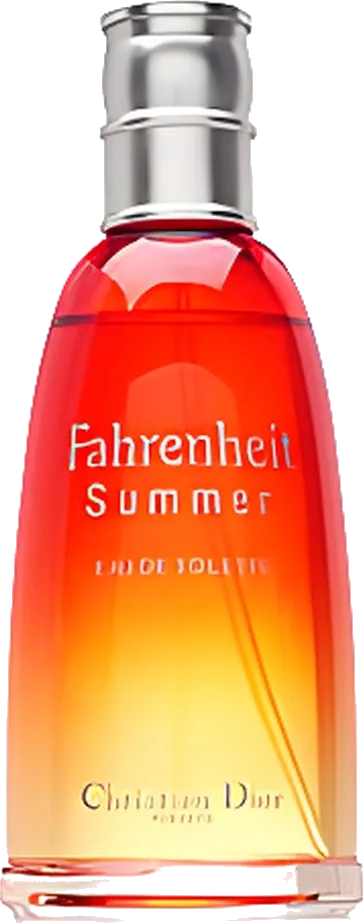
Dior released Fahrenheit Summer in 2002 as one of several limited warm-weather editions of its famous gasoline-leather masculine. Composed by Bertrand Duchaufour, it keeps a trace of the Fahrenheit DNA but strips out everything difficult, leaving a light citrus-violet scent built for hot weather. It has been discontinued for years, which matters for anyone considering a purchase today.
What Does Dior Fahrenheit Summer Smell Like?
The opening pairs mandarin orange with grapefruit, a brisk and slightly bitter citrus start that feels brighter than anything in the regular Fahrenheit lineup. Within the first half hour, a powdery violet takes center stage, supported by freesia and a smooth sandalwood backdrop. This floral phase is the signature of the fragrance: soft, slightly sweet, and unmistakably related to Fahrenheit’s violet core.
The drydown moves into cedar, amber, and patchouli. Compared with the original’s petrol and leather, this base is quiet and clean, closer to a refined woody amber than an industrial statement. Reviewers consistently describe the same arc: recognizable Fahrenheit DNA, pleasant and natural smelling, but with the depth stripped out. One common summary is that it smells like Fahrenheit with the danger removed, which is either the point or the problem depending on what you want.
Performance
Community data and user reviews agree that performance is modest. Expect roughly 3 to 6 hours on skin, with the final stretch sitting close to the body. Projection is moderate early on and becomes a skin scent within two to three hours. For a summer scent meant to be inoffensive, that profile is acceptable, but it is weak by Dior standards and weaker than most fragrances in this price bracket when new. The Parfumo community rates longevity and sillage around average, and complaints about the thin base are among the most repeated criticisms. Plan on reapplying if you need an evening out of it.
Best Clone Or Alternative
Armaf Bois Luxura is the closest alternative that is still easy to buy, typically around $49.89 for 3.4 oz. It follows the same blueprint: powdery violet over dry cedar, amber, and patchouli, with no harsh leather or gasoline note. The main difference is the opening. Where Fahrenheit Summer leads with mandarin and grapefruit, Bois Luxura uses basil, sage, lavender, and green notes, so the first twenty minutes smell more aromatic than citrusy. From the heart onward the resemblance is strong, and community reviewers regularly recommend it to people who missed out on Fahrenheit Summer. It also tends to outlast the original.
The tradeoff is authenticity and quality of materials. The Dior smells more natural and better blended, and it carries the actual design lineage. But with genuine bottles now surfacing mainly through resellers at prices like $340 for new old stock, paying collector money for a fragrance that fades in four hours is hard to defend. Bois Luxura captures most of the experience for a fraction of the cost.
When To Wear It
This is a spring and summer daytime scent. It works best in casual settings: weekends, office days in warm weather, outdoor lunches. The powdery violet keeps it polished enough for smart-casual situations, but there is not enough weight here for evenings or cold weather. In winter it would vanish almost immediately.
Who Should Buy It
Fahrenheit fans who find the original too challenging for daily wear will appreciate this gentler interpretation. So will anyone who enjoys violet-forward masculines like Dior Homme but wants something fresher for summer. If you already own Bois Luxura and love it, the original is worth sampling once.
Who Should Skip It
Anyone expecting real Fahrenheit character should skip it. There is no gasoline, no leather, and little of the smoky intensity that made the 1988 original famous. Skip it too if you dislike powdery florals, or if you are unwilling to hunt through resale listings and pay inflated collector prices for a discontinued bottle with mediocre longevity.
Final Verdict
Dior Fahrenheit Summer is a pleasant, well-made summer flanker that trades the original’s edge for approachability. As a scent it earns respect; as a purchase at current resale prices it does not. Armaf Bois Luxura delivers the same violet-and-cedar idea for about $50 and lasts longer. Unless you are a committed Fahrenheit collector, the affordable alternative is the smarter buy.