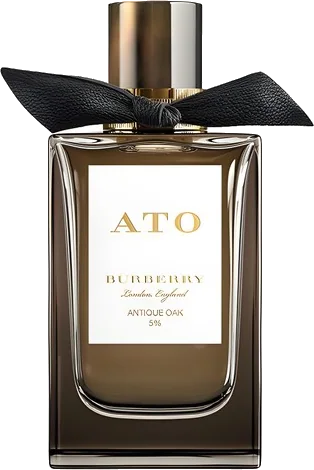
Burberry Antique Oak is one of the stranger entries in the brand’s catalogue: a Francis Kurkdjian composition from the 2017 Bespoke collection that smells nothing like the check-pattern designer shelf. It is a dark, dry, occasionally sweet woody leather that has since disappeared from first-party retail, which makes finding it, or a stand-in for it, a genuine project.
What Does Burberry Antique Oak Smell Like?
The opening is thick and boozy. Saffron arrives first, spicy and slightly medicinal, laid over dry papyrus that keeps things papery and cool rather than sweet. Within the first hour, the heart takes over: agarwood with a faint bitter edge, cade oil bringing a burnt, tarry woodsmoke, and styrax adding a leathery resinous glue that holds everything together.
The drydown is where opinions split. Leather, oakmoss and amberwood form the base, and the amberwood reads as a dark syrupy sweetness to many noses. Several reviewers describe it as maple syrup poured over hardwood, while others pick up mostly dry timber, sawdust and smoke. Both impressions come from the same juice; skin chemistry and expectation decide which one you get. There is also a quiet animalic facet underneath, more shadow than skank. Overall it wears polished and controlled, closer to a niche oud leather than anything mass market.
Performance
Performance is Antique Oak’s strongest argument. Community consensus lands at 8 to 12 hours on skin, with some reports stretching past that on fabric. Projection is strong for the first two to three hours, enough that four sprays can fill a room, then it settles into a noticeable presence for the rest of the day. The Bespoke line shipped in 5, 10 and 15 percent oil concentrations, and the widely circulated version is the 10 percent eau de parfum strength, which already behaves like a parfum. Apply conservatively for indoor settings; this is not an office-safe oversprayer.
Best Clone Or Alternative
Dua Winter Woods by The Dua Brand is the clear answer. It is sold as an explicit recreation of Antique Oak and uses the same reported note set: papyrus, leather, agarwood, amberwood, saffron, styrax and cade oil. A 34ml bottle costs about 36 dollars, a fraction of the roughly 129 dollars that surviving grey-market bottles of the Burberry command.
Two caveats matter. First, Winter Woods is blended at a much higher extrait concentration, around 33 percent, so it can smell denser and sweeter than the original rather than identical. Second, Dua’s stock turns over constantly and the product is often listed as sold out. If you want the Antique Oak experience at all, checking that page periodically is worth more than hunting down a 129 dollar bottle of uncertain provenance. What the original still does better is refinement: the Kurkdjian blend is smoother, with the oud behaving and the smoke better integrated.
When To Wear It
Antique Oak is built for cold weather. Fall and winter evenings are its natural habitat, especially date nights, formal events and anything outdoors in the cold where the leather and smoke have room to project. In summer heat the syrupy amberwood base can turn cloying and loud. It reads dressed up rather than casual, so save it for occasions that match.
Who Should Buy It
Buy it if you love dark woody leathers in the vein of Tom Ford Ebene Fume or Armani Cuir Noir and you want something far less common. It suits wearers who enjoy oud that stays polite, saffron-driven openings, and scents that lean masculine despite the official unisex label. Collectors chasing the full Bespoke story will want it regardless.
Who Should Skip It
Skip it if sweetness bothers you; the maple-syrup undertone is real and polarizing. Skip it if you want versatility or a daily driver, because this does neither well. And skip the grey-market hunt if budget matters, since some buyers reasonably argue the profile exists in cheaper Middle Eastern oud leathers.
Final Verdict
Antique Oak is a distinctive, long-lasting oud leather hampered by poor availability and a price that reflects scarcity more than value. As a scent it earns a solid 7 out of 10. For nearly everyone reading this, Dua Winter Woods at 36 dollars is the smarter buy: close enough in profile, easier to replace, and honest about what it is.