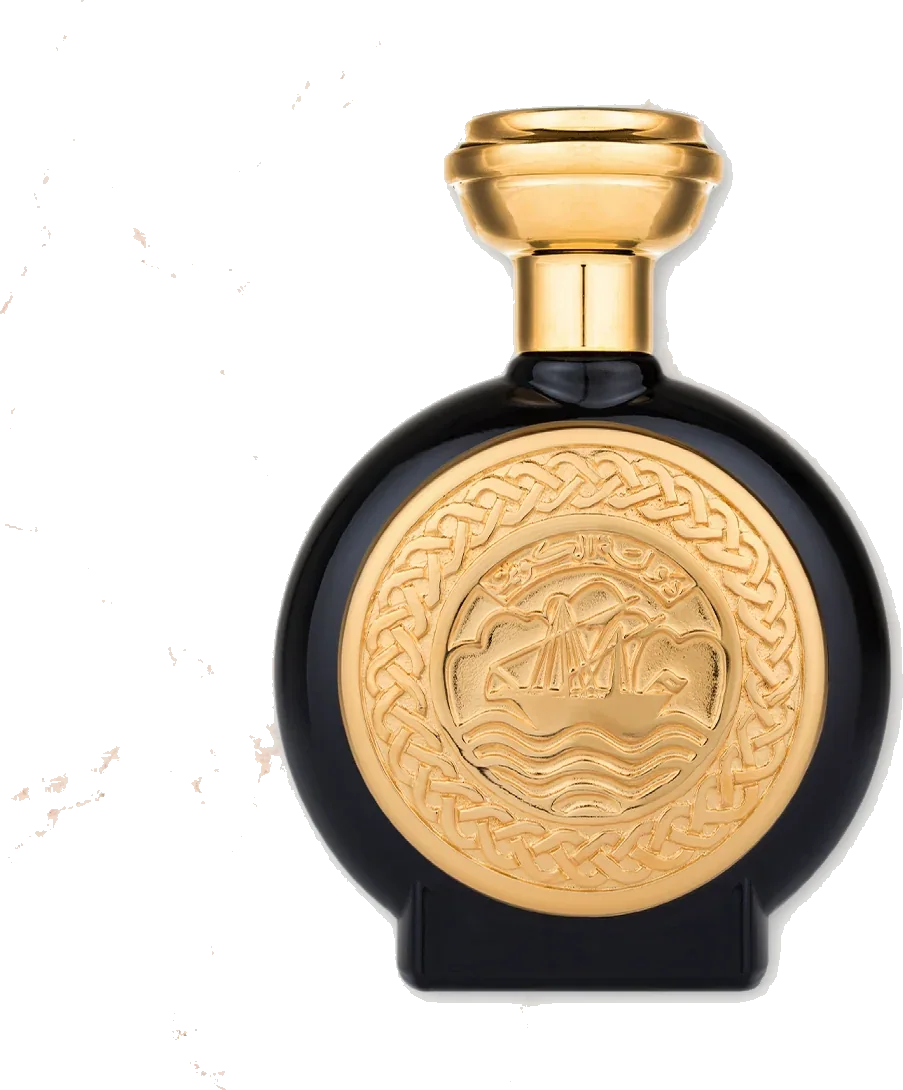
Boadicea the Victorous Dasman sits in the crowded rose-and-oud lane, but it earns attention through blending rather than novelty. Launched in 2018 as a tribute to Kuwait, it takes the classic Middle Eastern pairing and rounds off every rough edge, which explains both its devoted following and its recurring criticism that it resembles fragrances you may already own.
What Does Boadicea the Victorious Dasman Smell Like?
The opening is the boldest phase. Bergamot and lavender lift the top while saffron and geranium add a fresh, slightly metallic spice, and underneath it all the Cambodian oud announces itself with a brief animalic growl. A minority of wearers find those first minutes challenging, but most describe them as short-lived.
By the half-hour mark the fragrance settles into its signature: a velvety Turkish rose draped over the oud, sweetened with a fruity, almost boozy plum facet and cooled by neroli. Community reviewers repeatedly use words like purple, honeyed and syrupy for this heart, and comparisons to Tom Ford Noir de Noir come up often because of the shared truffle-like rose character.
The drydown turns earthy and resinous. Cypriol, patchouli and vetiver ground the composition, amber and musk add warmth, and frankincense gives a faint bakhoor-style smokiness that feels distinctly Gulf-inspired. Where many rose-oud fragrances stay loud, Dasman ends clean, woody and close to the skin, with the rose lingering as an ambient glow rather than a shout.
Performance
Performance is good but not spectacular for the price tier. Most reports land between 6 and 9 hours, with the scent becoming a long-lasting skin scent in the final stretch. Projection follows the same pattern: strong enough to be noticed in the first hour, then settling into a modest bubble. Several owners note that fresh batches perform weaker and improve noticeably after several months of maceration, so patience matters if your bottle seems thin out of the box. This moderate behavior surprises buyers expecting typical Boadicea loudness, and it is the most common performance complaint alongside the price.
Best Clone Or Alternative
Dua Pride of Kuwait is the obvious budget route. Dua sells it explicitly as an inspired expression of Dasman, listing the identical note palette of saffron, bergamot, geranium, Turkish rose, neroli, amber, musks, patchouli, vetiver, Cambodian oud, nagarmotha and incense, bottled at a 33 percent extrait concentration. At $65 for 34ml it costs roughly a tenth of Dasman’s $625 retail price, and it reproduces the rose-saffron-oud structure convincingly.
The tradeoff is refinement. The original reads smoother and more natural, particularly in how the animalic oud melts into the rose; the Dua version is a touch coarser and does not last quite as long on skin. If you love the DNA and want to test whether rose-oud suits you, Pride of Kuwait is a low-risk entry point. If you already know this style is your signature, the original still justifies itself through polish alone.
When To Wear It
Dasman works best from fall through spring and in evening settings. Date nights, dinners and special occasions are where its smooth richness shows best, though its moderate projection makes it office-safe if you apply lightly. It reads unisex, leaning gently feminine to some noses and gently masculine to others, so either wearer can carry it. In serious summer heat the sweetness and oud can turn heavy.
Who Should Buy It
Buy Dasman if you love refined rose-oud compositions, appreciate natural-feeling materials over synthetic blast, and want a compliment-getter for cool-weather evenings that few people around you will be wearing. Collectors who admire Noir de Noir but want a darker, oud-forward variation are a natural fit.
Who Should Skip It
Skip it if the $625 price tag stings, since Pride of Kuwait covers the essentials for far less. Skip it too if you want monster projection, if you already own several rose-oud fragrances and crave something genuinely different, or if animalic openings put you off entirely.
Final Verdict
Dasman is one of the most polished rose-oud blends available from a Western niche house, held back mainly by familiar DNA and a steep price. As scent, it deserves its reputation. As a purchase, sample first, consider the Dua alternative seriously, and buy the original only if its extra smoothness matters to you.