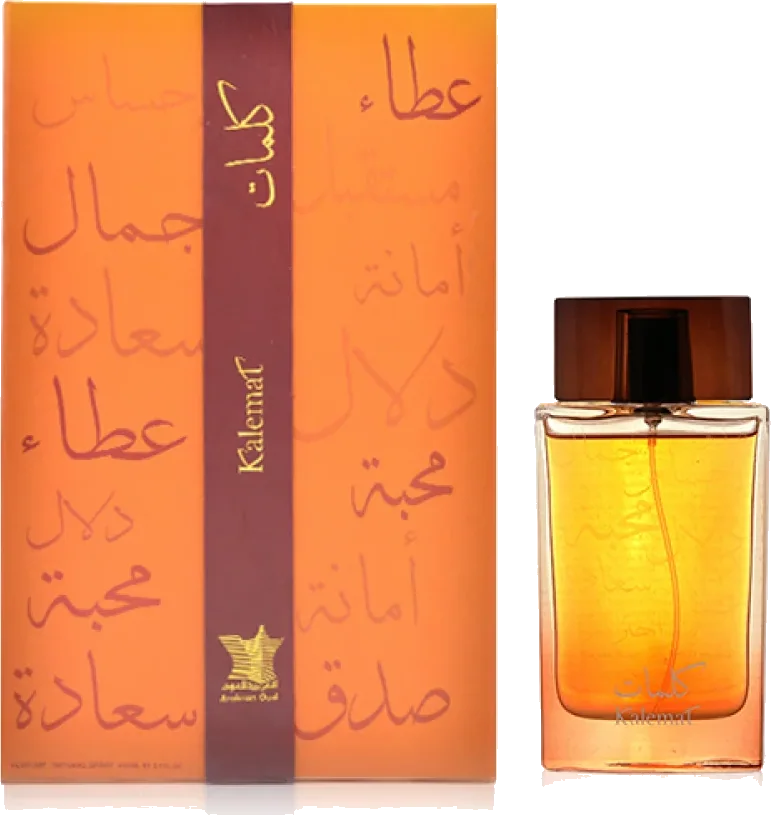
What Does Arabian Oud Kalemat Smell Like?
Kalemat starts loud. The first spray pairs blueberry with anise, which produces a jammy, almost candy-like effect that some wearers compare to bubblegum and others call medicinal. That opening is polarizing, and it is the single most common complaint about the fragrance. Give it twenty minutes before judging.
As the top fades, cashmere wood, faint florals, and rosemary smooth things out, and the heart of the perfume takes over: honey. Not dessert honey drizzled over cake, but a dense, slightly animalic honey wrapped in amber. Reviewers who compare it to Montale Honey Oud or a concentrated Serge Lutens Chergui are describing exactly this phase. By the drydown you are left with smoky honey, warm amber, soft musk, and a whisper of berry jam on a woody base. Despite its reputation, most experienced wearers agree it is less sugary than the notes suggest. It is an oriental amber with a fruity twist, not a gourmand.
Performance
This is where Kalemat earns its price. Parfumo users rate longevity at 8.3 out of 10 across hundreds of votes, and sillage close behind at 7.8. Realistic expectations are 8 to 12 hours on skin, with strong projection for the first two to three hours before it settles into a noticeable scent bubble. On fabric it is a different animal entirely; multiple reviewers report it clinging to scarves and jackets for two or three days after a single spray.
The flip side is overspraying risk. Two sprays is plenty for most settings, and four will fill a room and possibly cloy in mild weather. Heat amplifies the sweetness, so this behaves best when the air has a chill in it.
Best Clone Or Alternative
Perfume Parlour’s Arabian Words - 1018 is the obvious budget route. It is sold openly as inspired by Kalemat and reproduces the same published structure: blueberry and anise up top, cashmere wood and rosemary through the middle, amber, honey, and musk at the base. It costs roughly £18 for 50 ml against $120 for the 100 ml original, so you could buy five bottles for the price of one.
Buyer feedback is mixed on how close it gets. Some call it a very acceptable copy, while others put similarity below half. A fair estimate is around 70 percent: the skeleton matches, but the original is denser, smoother, and better blended, especially in the drydown where the clone thins out faster. If you want to test whether the Kalemat style works on your skin, start with the clone. If you already know you love honey ambers, the original justifies itself.
When To Wear It
Fall and winter are its natural habitat, and cool spring evenings work too. It suits daily office wear at two sprays, evening events, and special occasions where you want a warm signature trail. Avoid high summer and crowded indoor spaces unless you apply with restraint, because the honey amber can turn heavy once temperatures climb past warm.
Who Should Buy It
Anyone who loves Middle Eastern-style ambers, honey-forward scents like Montale Honey Oud, or rich sweet resins but balks at designer pricing for that style. It is also a strong pick for cold-weather signature scent hunters, since 100 ml at $120 undercuts most niche competitors considerably while performing like an extrait.
Who Should Skip It
If anise or fruity-sweet openings bother you, the first hour will be rough. If you prefer fresh, clean, or citrus scents, this will smell heavy and sticky. And if you want something subtle for hot climates, look elsewhere entirely.
Final Verdict
Kalemat has survived more than fifteen years in a crowded market because the honey amber drydown genuinely delivers and the performance borders on excessive. The divisive blueberry anise opening keeps it from being universal, but patient wearers get one of the best price-to-quality ambers available today. Sample the Perfume Parlour version first if you are unsure; buy the original once you know you will finish a bottle.