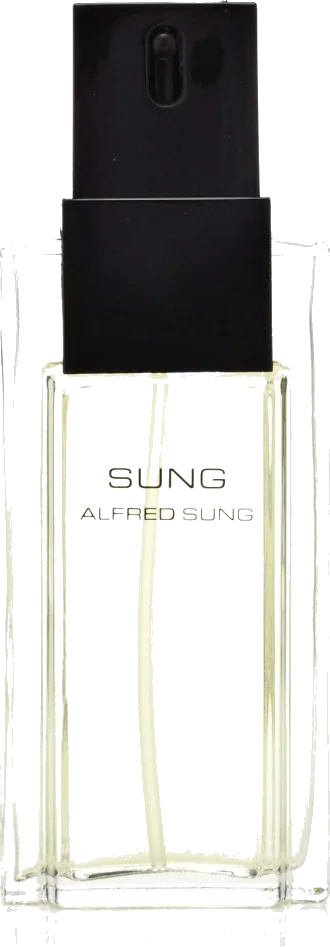
What Does Alfred Sung Sung Smell Like?
Sung opens with a sharp, green burst of hyacinth backed by galbanum, bergamot, lemon, mandarin, and orange. The first minutes are bright and almost bitter, with the citrus keeping the heady flowers in check. Within half an hour, the heart takes over: jasmine, lily of the valley, carnation, rose, orchid, iris, and osmanthus form a dense but well-blended bouquet. Community consensus is clear that this is fundamentally a hyacinth fragrance, with several reviewers noting it smells strikingly close to the real flower blooming outdoors.
The drydown shifts toward orange blossom, oakmoss, vetiver, sandalwood, musk, amber, and vanilla. This base gives the floral heart a mossy, slightly earthy gravity rather than a sugary finish. Compared to other 1986 releases such as Giorgio Beverly Hills, Sung stays greener and less suffocating, and next to Cacharel Anais Anais it comes across as spicier and more exotic without the powder-puff softness.
Performance
Sung is an eau de toilette, and it performs like one. Most wearers report 5 to 8 hours of longevity, which puts it squarely in moderate territory. Projection is noticeable for the first hour or two, then it settles into a closer skin scent that still leaves a soft trail. Applying to fabric extends its life noticeably.
That restraint is arguably a feature. Full-bodied white florals can overwhelm an office at higher concentrations, so the moderate sillage makes Sung more wearable than many of its louder decade-mates. Do not expect room-filling power, and do not buy it expecting all-day endurance in summer heat, where lighter florals tend to fade faster.
Best Clone Or Alternative
Perfume Parlour’s Unique For Women - 1110060 is the closest documented alternative, and notably the brand itself lists it as notes similar to Alfred Sung rather than leaving buyers to guess. It recreates the green floral core of hyacinth, galbanum, jasmine, and lily of the valley over oakmoss and musk as a budget perfume oil, with listings starting around £3 compared to roughly $30 to $60 for 100 ml of the EDT.
The tradeoff is format and finish. An oil sits closer to the skin, skips the sparkling citrus opening, and diffuses less in air. For testing whether you love this style of fragrance, the clone is a nearly risk-free entry point. If you decide you want the full experience, the genuine bottle remains inexpensive enough that most people simply buy both.
When To Wear It
Spring is Sung’s natural habitat, when real hyacinths are in bloom and the scent reads as a garden portrait rather than a retro statement. Summer mornings and crisp autumn days also suit it, and some loyalists wear it through winter precisely because the mossy base holds up in cold air. Occasion-wise, it covers daily wear, office settings, date nights, and special occasions without ever smelling out of place, though its classic register leans dressier than casual weekend scents.
Who Should Buy It
Sung suits wearers who genuinely love hyacinth and white florals, fans of vintage-style green florals like Chanel Cristalle or Paul Sebastian Design, and anyone who wants a polished floral for under $60. Longtime users describe it as a decades-long signature, which says something about how easy it is to live with once it clicks.
Who Should Skip It
If your collection revolves around gourmands, fruits, or clean modern musks, Sung will feel dated and possibly harsh. A few reviewers bluntly call it an old lady scent, and the indolic jasmine plus bitter galbanum combination can be polarizing. Anyone sensitive to mossy, chypre-leaning bases should sample before committing.
Final Verdict
Sung earns its reputation as an affordable classic. The hyacinth rendering is realistic, the blend is far more complex than the price suggests, and the moderate performance fits office-friendly wear. Value is where it truly wins: few fragrances this well composed cost so little. Try the Perfume Parlour oil if you are unsure, but the original EDT delivers the fuller picture for the price of two lunches.